
Packaging Expo 2026 in Lund
On October 20, students from the Food Packaging Design and Logistics specialization track participated in the Packaging Expo 2026, held at IKDC in the Faculty of Engineering (LTH) at Lund University. The expo meant the culmination of eight weeks of work in the Packaging Technology and Development course.
Throughout the course, students worked in interdisciplinary and multicultural teams, each partnering with a company. Over these eight weeks, the projects gave students the opportunity to understand and evaluate a packaging system based on user needs, product requirements, and sustainability.
This year’s industry partners included FrontPac, Micvac, Alfa Laval, Orkla, Verisure, Bel Nordic, Oatly and Saveggy.
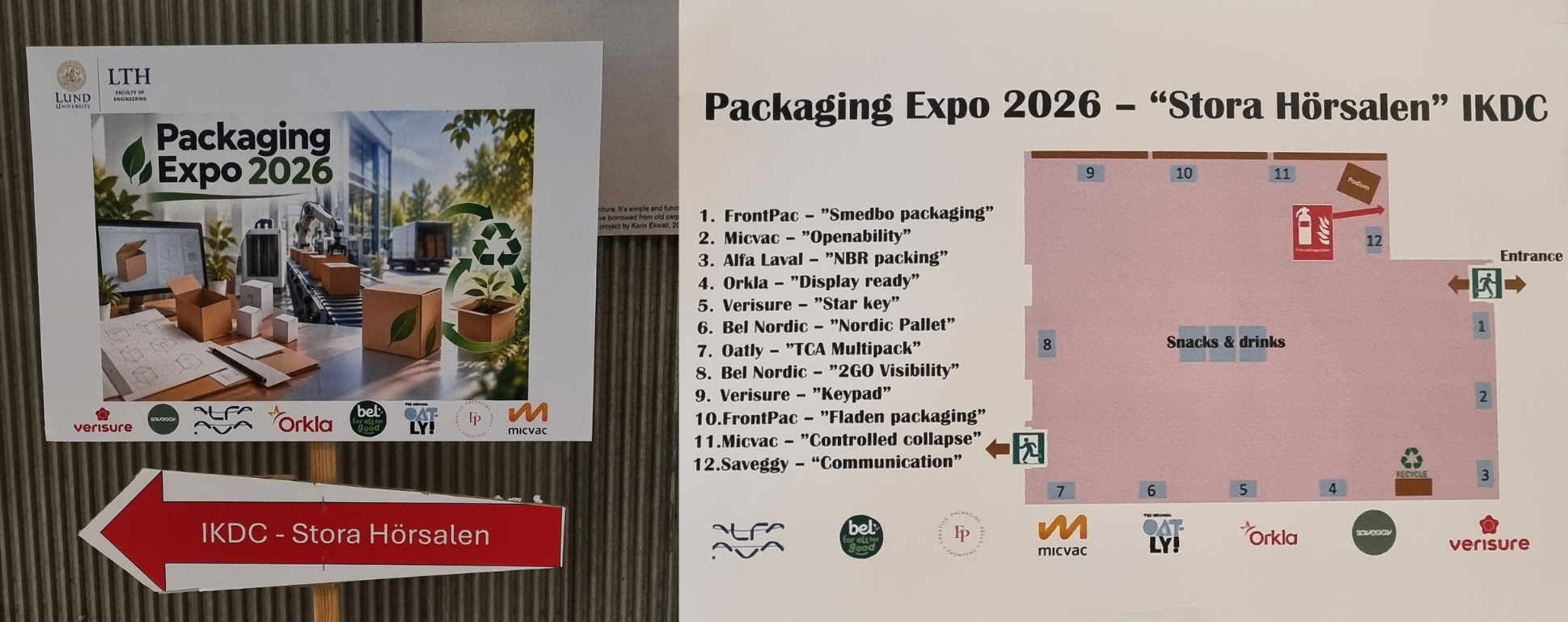
The event was open to the public, and attended by professors from the Division of Packaging Logistics, industry partners and other visitors, who toured the stands to learn about each project and see their posters and prototypes. Guests also enjoyed snacks and drinks contributed by the participating companies.
FIPDes students worked on projects with Bel Nordic and Saveggy:
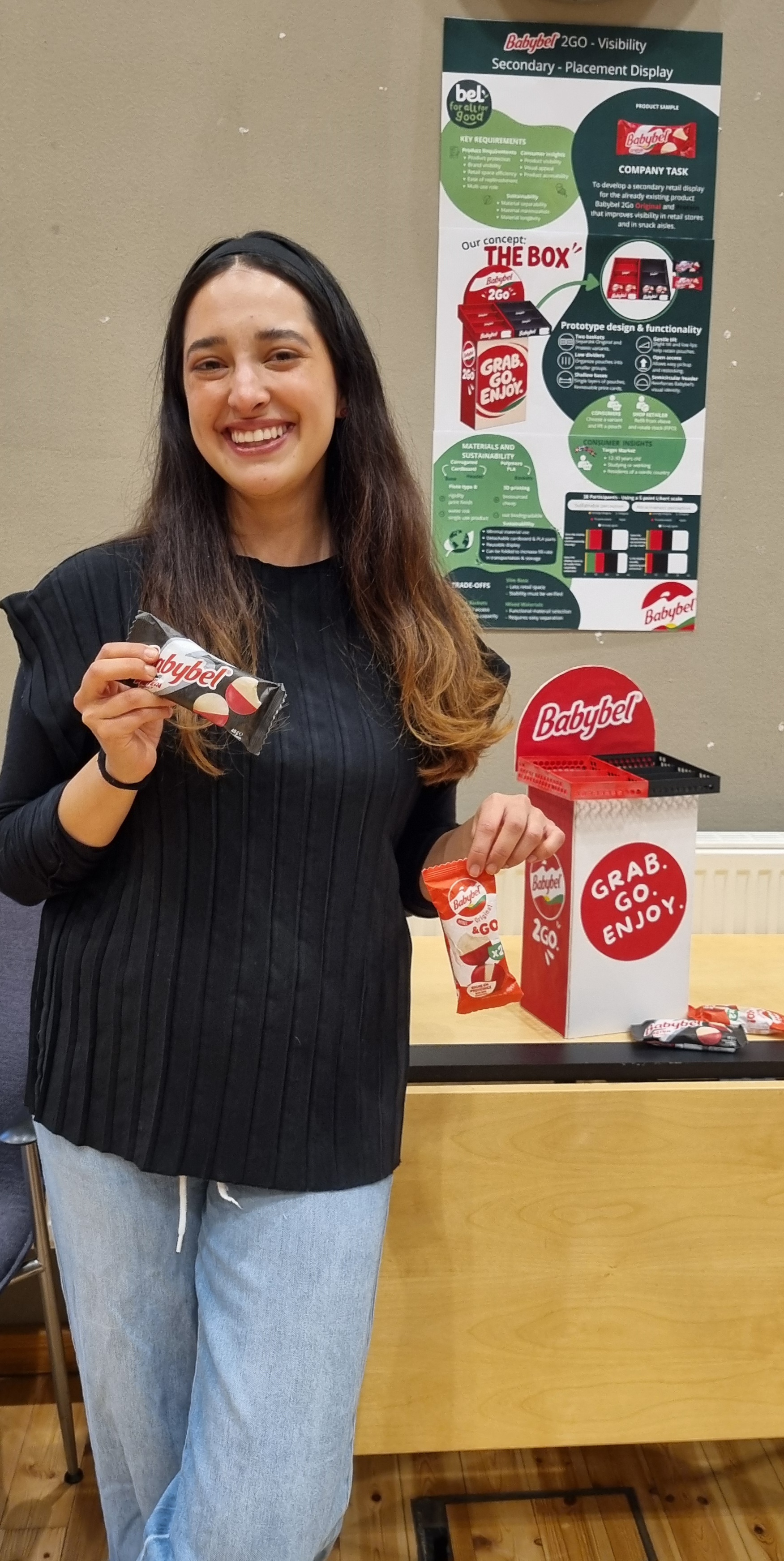
Ximena Cobos and her team collaborated with Bel Nordic, where their challenge was to go beyond packaging design: rethinking how Babybel To Go could stand out in a retail environment, attract consumer attention, and fit seamlessly into retailers’ everyday operations.
Their solution is a versatile, modular secondary display designed around three key principles:
• Visibility: The display creates a distinctive point of attraction in the store, helping Babybel To Go stand out and encouraging consumers to discover this new snacking occasion.
• Flexibility: They designed the display to adapt to different retail environments. It can stand on the shop floor with a dedicated base, be separated into smaller components and hung inside refrigerated cabinets or use individual plastic basket units placed directly on existing shelves. One concept, multiple ways to display the product.
• Sustainability: By making the display modular and separable, its different components can be handled and sorted by material at the end of their useful life, supporting more efficient recycling. Its adaptable design also offers retailers different ways to use the same solution across store layouts.
Their goal was simple: to make Babybel To Go more visible to consumers, more practical for retailers, and more adaptable throughout its lifecycle. As they reflect, changing consumer behaviour doesn’t start with changing the product. It starts with changing how people discover it.
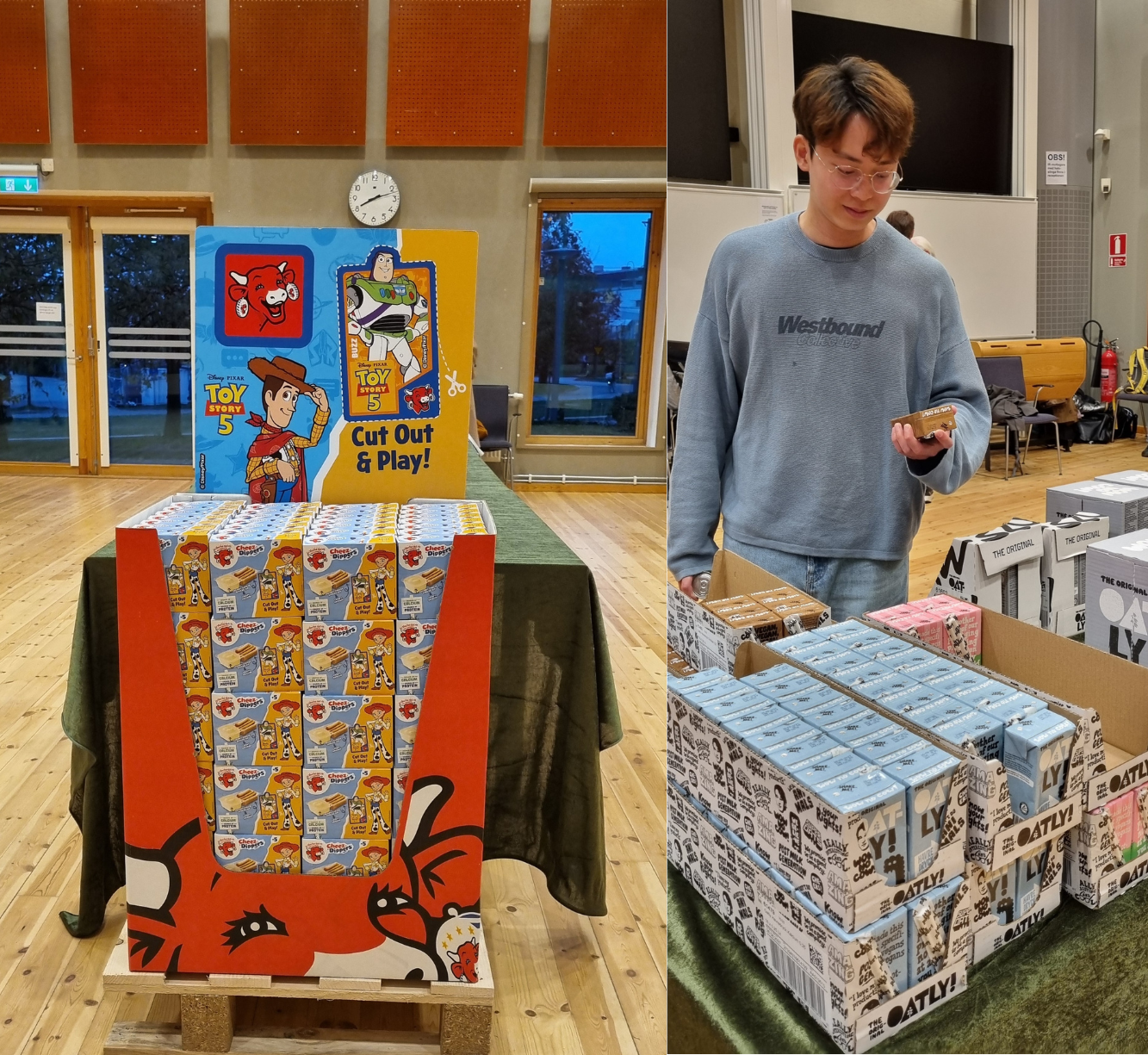
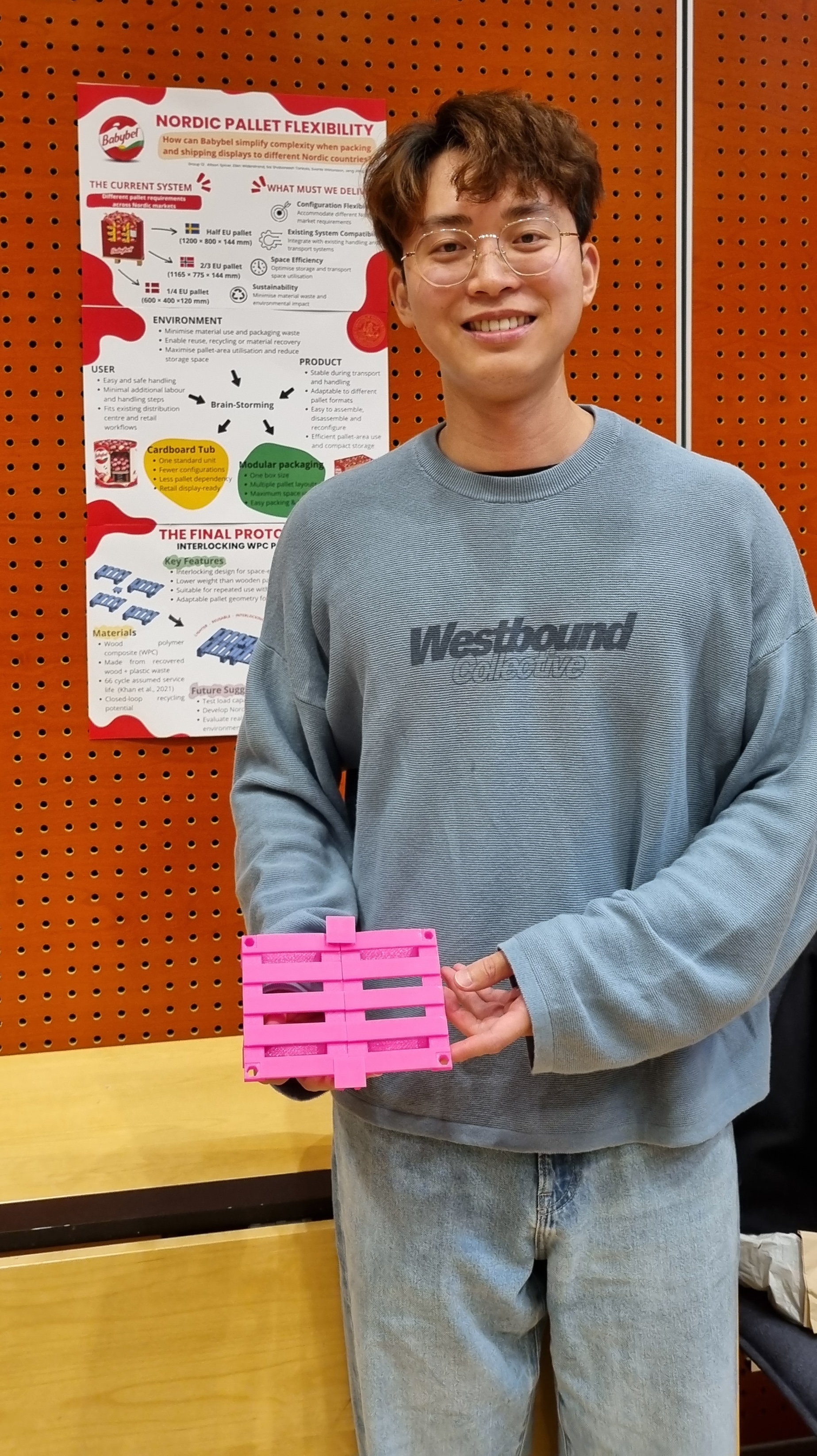
Zack Wu and his team also worked on a separate project with Bel Nordic, where their challenge was to reduce the complexity of Babybel’s pallet display logistics across Nordic markets by developing a flexible solution that accommodates different pallet configurations while maintaining transport stability, space efficiency, and compatibility with existing logistics operations.
For their solution, they developed an interlocking modular pallet system made from wood–polymer composite (WPC) incorporating recovered wood and plastic waste. The modules can be connected to create different pallet configurations, with two ¼-pallet modules forming a ½-pallet configuration and a dedicated configuration proposed for Norway. Compared with wooden pallets, WPC offers potential advantages in service life and transport fuel consumption. Compared with conventional plastic pallets, WPC incorporates recovered wood alongside plastic and offers potential for closed-loop recycling. The modules can connect to form different pallet configurations, reducing the need to manage multiple dedicated pallet designs.
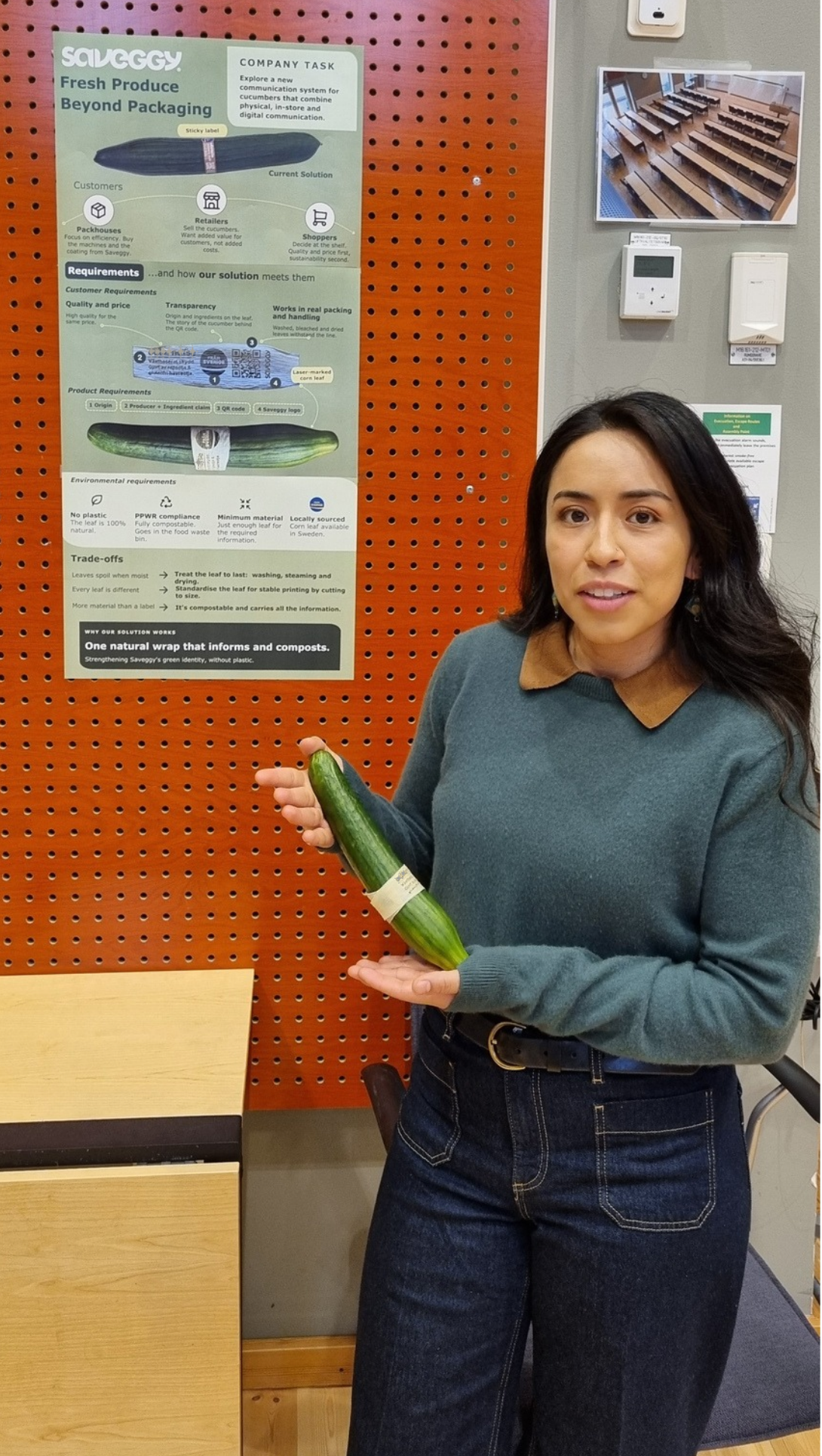
Andrea de la Cruz and her team partnered with Saveggy, a Swedish company that sells a two-ingredient coating, made from rapeseed oil and gluten-free oat oil, that replaces plastic film and keeps it fresh. However, without the plastic, the cucumber loses the space to communicate the brand, its origin and information about the coating. Today this is done with a small sticky label that is not compostable and will not comply with the PPWR from 2028.
The challenge was to explore a new communication system for cucumbers that combines physical, in-store and digital communication: communicating that information with minimal material, reinforcing Saveggy as a stamp of quality, and complying with the PPWR. In addition, customers (packhouses, retailers and consumers) want transparency without paying more or making extra effort.
Their solution was a corn leaf, sourced in Sweden, wrapped around the cucumber. The leaf is treated through washing, steaming and drying, and then laser marked. This way, it can carry the same information required: the brand, the producer, the ingredients and a QR code. The solution is aligned with Saveggy’s branding, where everything is natural, and it is fully compostable, so everything goes into a single waste bin.
The expo closes one of the first two courses in Lund. Next, students move on to Packaging Material Science and Packaging Logistics.
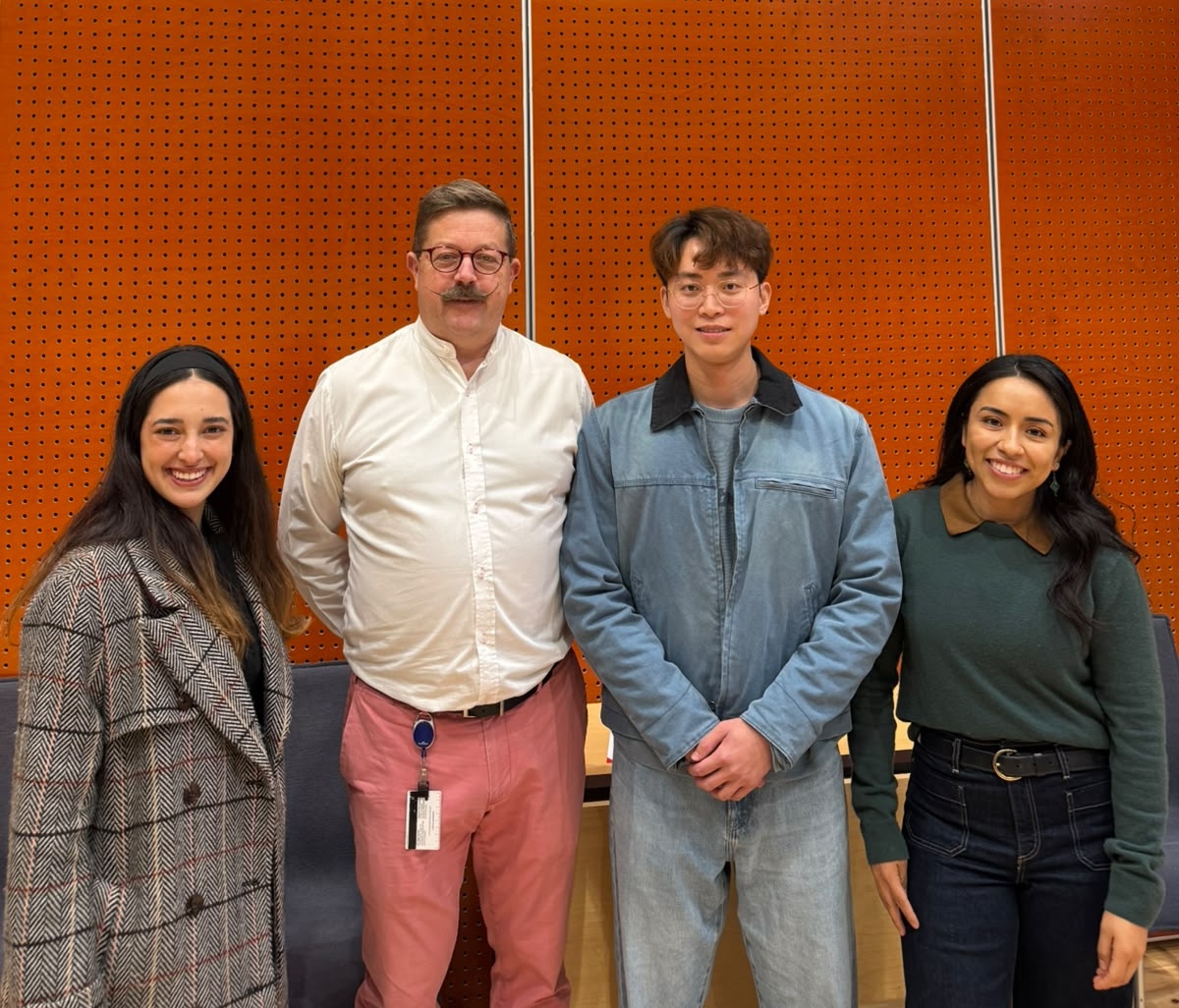
In the photo below is also Lars, who was an excellent host for the event and accompanied us throughout this process. Without him, this would not have been the same.
- Updated October 2026 -